
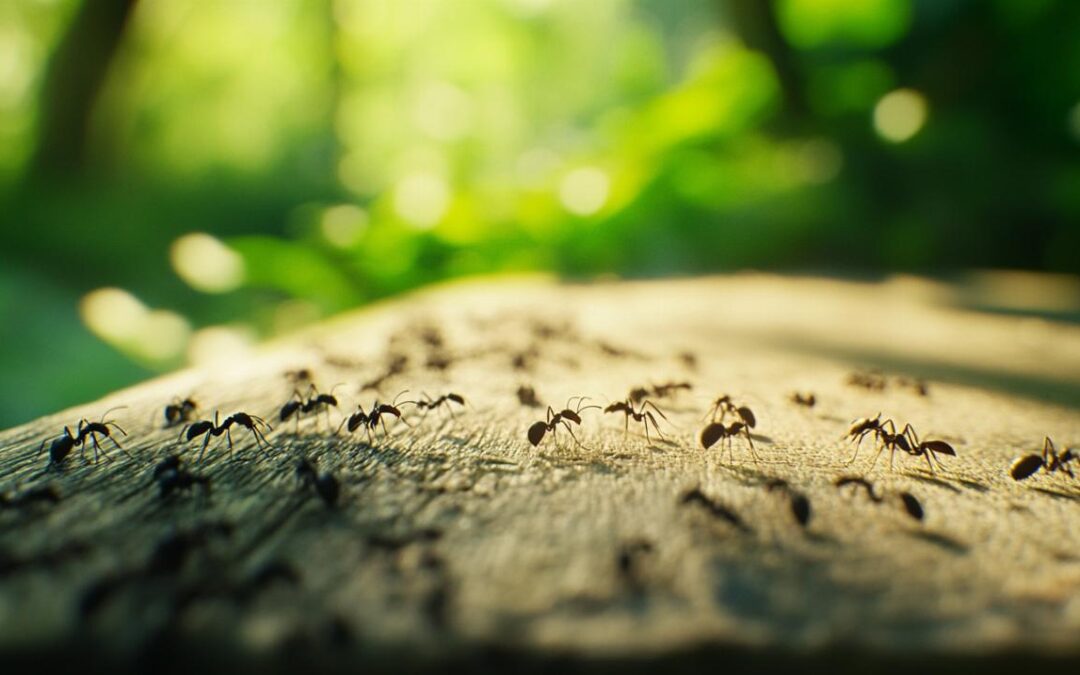
The humble ant, often dismissed as a mere nuisance at picnics or an unwelcome visitor in the kitchen, represents one of nature's most remarkable success stories. These diminutive creatures, numbering in the trillions across the globe, have mastered the art of survival through cooperation, industriousness, and an extraordinary capacity for adaptation. From the manicured lawns of Surrey to the wild gardens of the Scottish Highlands, ants play a vital role in maintaining ecological balance, yet their true value remains largely misunderstood. Beyond their ecological contributions, ants have inspired countless cultural narratives and continue to offer profound lessons about community, perseverance, and the delicate interplay between chaos and order.
The Fascinating World of Ant Colonies: Structure, Species and Ecological Significance
Understanding colony dynamics and social hierarchies
At the heart of every ant invasion lies a colony, a sophisticated superorganism where individual insects function as cells within a larger body. The colony operates with a precision that rivals any human enterprise, with each member fulfilling a specific role that ensures the survival and prosperity of the whole. The queen, often the sole reproductive female, anchors the colony, dedicating her existence to laying thousands of eggs that will become the workforce, soldiers, and future queens. Worker ants, all sterile females, undertake the laborious tasks of foraging, nest maintenance, and brood care, while soldiers, equipped with larger mandibles and a more aggressive disposition, defend the colony against threats.
What truly sets ants apart is their ability to communicate through chemical signals known as pheromones. When a forager discovers a rich source of food, it lays down a trail of these scent markers, guiding its sisters to the bounty with remarkable efficiency. This system allows the colony to adapt rapidly to changing circumstances, redirecting resources and labour as needed. The result is a decentralised intelligence, where no single ant possesses the full picture, yet the colony as a whole exhibits behaviours that appear almost conscious. This dynamic interplay between individual action and collective outcome has fascinated biologists and philosophers alike, prompting questions about the nature of consciousness and the origins of complex societies.
British garden species: from black ants to red invaders
In British gardens, the most commonly encountered species is the black garden ant, known scientifically as Lasius niger. These unassuming insects are a familiar sight during the warmer months, forming long trails across patios and paths as they search for sugary secretions from aphids or crumbs left by careless diners. Despite their reputation as pests, black garden ants perform invaluable ecological services. They aerate the soil through their tunnelling activities, disperse seeds, and help control populations of other insects by preying on larvae and eggs.
However, not all ants in the British Isles are quite so benign. The red ant, particularly the common red ant or Myrmica rubra, possesses a painful sting and can become aggressive when its nest is disturbed. While less frequently encountered in urban settings, these ants are abundant in grasslands and heathlands, where they play a crucial role in the ecosystem. Their nests provide habitat for a variety of other invertebrates, and their predation on smaller insects helps regulate populations. Yet the presence of red ants in gardens can be cause for concern, especially for families with young children or pets, as their stings, though not dangerous, can be quite uncomfortable.
The term invasion, when applied to ants, often carries negative connotations, conjuring images of hordes overwhelming homes and gardens. In reality, most ant species are not invaders but rather native inhabitants whose populations fluctuate in response to environmental conditions. A sudden increase in ant activity is typically linked to changes in weather, availability of food, or disturbances to their natural habitat. Understanding these patterns can help gardeners and homeowners coexist with ants rather than resorting to indiscriminate extermination.
Symbolism and Cultural Heritage: Ants in Celtic Traditions and Contemporary Literature
Ancient celtic interpretations of industrious insects
Long before the advent of modern entomology, ancient peoples observed the behaviour of insects and imbued them with symbolic meaning. In Celtic traditions, ants were revered as embodiments of industriousness, patience, and foresight. The Celts, attuned to the rhythms of nature, recognised that ants spent the warmer months gathering provisions, preparing for the harshness of winter with a diligence that humans would do well to emulate. This association with preparation and community effort made the ant a powerful symbol in folklore and oral tradition.
Stories passed down through generations often featured ants as messengers or guides, creatures whose small size belied their wisdom. In some tales, ants were said to possess knowledge of hidden treasures, their underground networks leading to forgotten riches. This symbolic link between ants and hidden knowledge reflects a broader Celtic belief in the interconnectedness of all living things and the idea that even the smallest creatures have something profound to teach. The ant's ability to work tirelessly without complaint also resonated with Celtic values of resilience and collective responsibility, qualities that were essential for survival in often harsh and unforgiving landscapes.
Bernard werber's vision: modern literary perspectives on ant society
In contemporary literature, few works have captured the imagination of readers quite like Bernard Werber's trilogy beginning with Les Fourmis. Werber's novels transport readers into the world of ants, presenting their societies not as mere curiosities of nature but as complex civilisations with their own wars, politics, and philosophies. Through the eyes of his ant protagonists, Werber explores themes of communication, cooperation, and the often brutal realities of survival. His work challenges anthropocentric views, suggesting that intelligence and culture are not the exclusive domain of humans.
Werber's ants are portrayed as beings with agency and emotion, capable of heroism, treachery, and innovation. This literary device serves a dual purpose: it entertains while also prompting readers to reconsider their relationship with the natural world. By anthropomorphising ants, Werber does not diminish their true nature but rather highlights the parallels between human and insect societies. His novels suggest that the study of ants can offer insights into our own behaviours, particularly in the realms of social organisation, resource management, and conflict resolution. The enduring popularity of Werber's work speaks to a growing recognition that the natural world, in all its diversity, holds lessons for humanity as we navigate the complexities of the modern age.
Lessons from the Colony: Applying Ant Wisdom to Human Endeavour and Resource Management
Collaborative graft: what ant communities teach us about teamwork
The concept of graft, or hard work, takes on new dimensions when viewed through the lens of ant society. Unlike human endeavours, where individual achievement is often celebrated above collective success, ant colonies operate on principles of absolute cooperation. Each worker ant contributes to the colony's welfare without seeking personal reward or recognition. This selflessness is not the result of moral deliberation but rather an evolutionary strategy that has proven extraordinarily effective. By prioritising the colony over the individual, ants have achieved a level of efficiency and resilience that few other organisms can match.
For humans, the ant colony offers a compelling model for collaborative graft. In an era marked by increasing individualisation and competition, the notion that success might be better achieved through cooperation is both radical and appealing. Businesses and organisations have long looked to nature for inspiration, and the study of ant colonies has informed everything from logistics and supply chain management to artificial intelligence algorithms. The way ants allocate labour, respond to threats, and optimise foraging routes provides a blueprint for solving complex problems in human systems. By observing how ants balance flexibility with structure, leaders can foster environments where teams function with the cohesion and adaptability of a thriving colony.
Sustainable resource distribution inspired by nature's tiny engineers
Resource management is another area where ants excel, demonstrating strategies that could inform more sustainable human practices. Ants do not hoard resources beyond what is necessary for survival; instead, they distribute food and other materials throughout the colony in a manner that ensures equitable access. This decentralised distribution system minimises waste and maximises efficiency, allowing the colony to respond dynamically to shortages or surpluses. In times of abundance, ants store food in communal larders, but they do so with an eye towards future needs rather than accumulation for its own sake.
This approach contrasts sharply with many human systems, where resource distribution is often inequitable and wasteful. The study of ant colonies suggests that sustainability is not merely a matter of reducing consumption but also of rethinking how resources are shared and managed. By adopting principles observed in ant societies, such as decentralised decision-making and collective responsibility, human communities might develop more resilient and equitable systems. The ant's ability to thrive in diverse environments, from tropical rainforests to arid deserts, underscores the importance of adaptability and cooperation in the face of environmental challenges. As the world grapples with issues of climate change, resource depletion, and social inequality, the lessons gleaned from these tiny engineers may prove more relevant than ever.
 The ultimate robot animals zoomer review & comparison: why children love these eco-friendly electronic companions
 Taming a Wild Boar: Between Legislation and Passion – Ministerial Authorisations and Capacity Certificates Explained
 Offer a Miniature Stable for Christmas: Combining Timeless Wooden Toys with Charming Nativity Animals